
About Hackstarter
Hackstarter is a grant programme giving inventors at Imperial the ability to make prototypes of their early-stage concepts.
Our award-winning scheme enables students, staff and alumni to go through a structured design process and create physical products in our maker space using traditional and digital prototyping equipment.
Over a ten week programme, selected teams have the opportunity to develop their early stage prototypes in a supportive and inclusive learning environment with the assistance of a £500 grant towards materials costs.
The end-of-programme Final is the showpiece of the programme, where our teams present their innovations to a panel of judges and compete for a follow-on support package.
Visit the Hackstarter page to learn more about the programme.
Hackstarter 2026 Overview
Hackstarter 2026 drew strong interest from across Imperial with 92 team applications, 14 projects selected across three pathways (Open Projects, Lab Automation and Research Innovation). The programme culminated in 9 finalists, 3 pathway winners and 2 people’s vote champions.

Event Final 2026
In March 2026, nine shortlisted teams presented their novel prototypes at the Hackstarter Final, showcasing an impressive standard of work.
Innovators pitched the potential of their early-stage prototypes to a panel of judges for the chance to win follow-on support to develop their ideas further.
Projects were assessed according to the progress made relative to their original starting point and the level of innovation demonstrated, including the strength, feasibility, and potential impact of the idea.
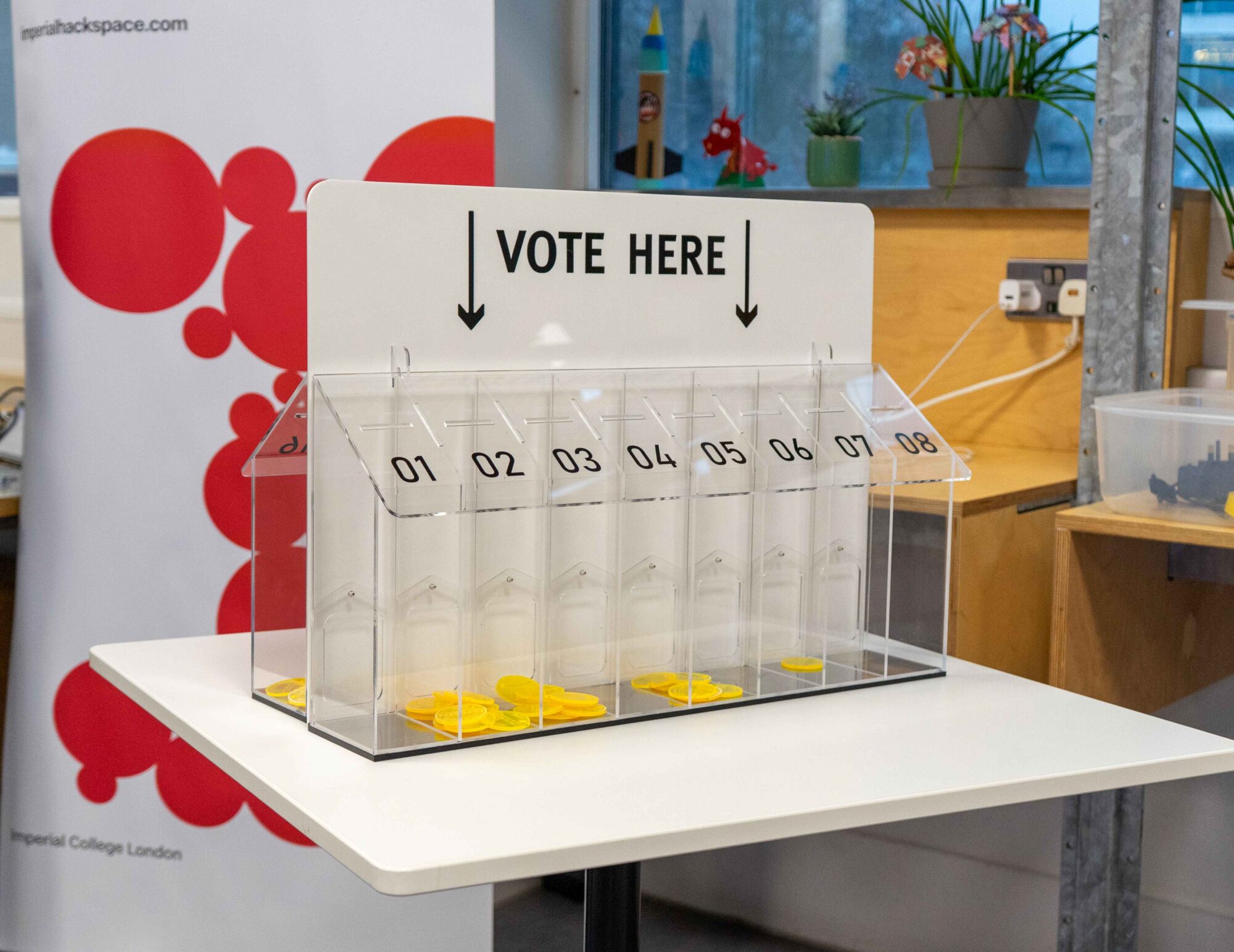
Live presentations were complemented by a prototype display and poster exhibition of all projects participating in this year’s programme. New for this year, guests voted for their favourite innovation in the People’s Vote Award.



My favourite event of the year. It’s a great strength of Imperial that there is this space for people to develop their daring ideas: the finalists had a very exciting set of projects.
Hackstarter 2026 Winners
Meet our winning Hackstarter projects and discover the innovative thinking behind them below.
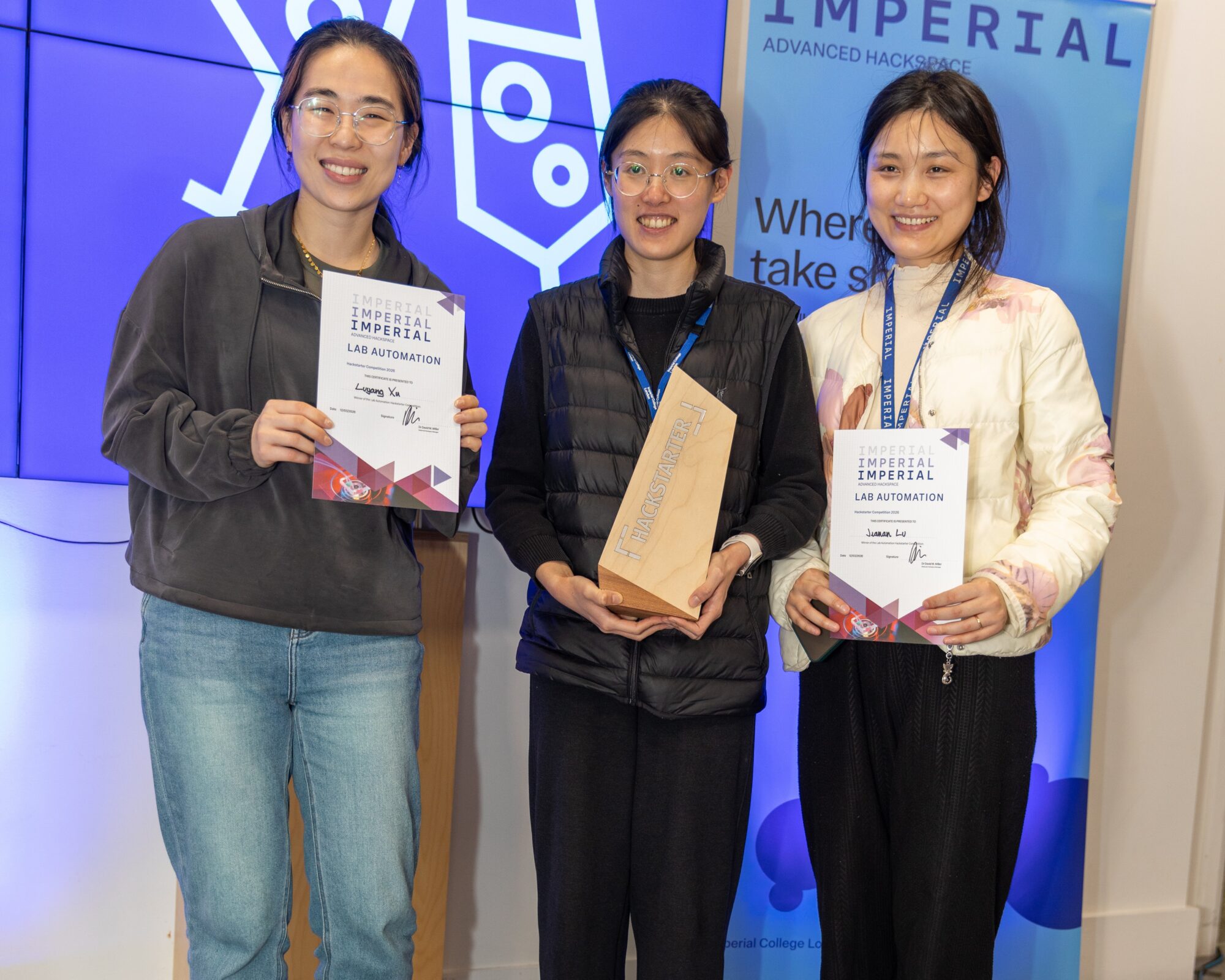
Hackstarter Award: Lab Automation
Title: AI-Powered Treadmill System
Creators:
Leah Xu, Te Bu, Jianan Liu
Description:
Automated Treadmill for Behavioural and Physiological Analysis.
Lab researchers encounter a common challenge: the equipment required to conduct high-quality analysis of motion is often large, prohibitively expensive and slow. This Hackstarter project addresses this issue directly with a compact, AI-powered treadmill system that automatically tracks movement and monitors physiological function, all within a benchtop device designed to be both accessible and cost-effective. What used to take hours of painstaking analysis can now happen in the background while researchers get on with the rest of their work.
Why Hackstarter Mattered
Support Provided by Hackstarter
Hackstarter Award: Research Innovation
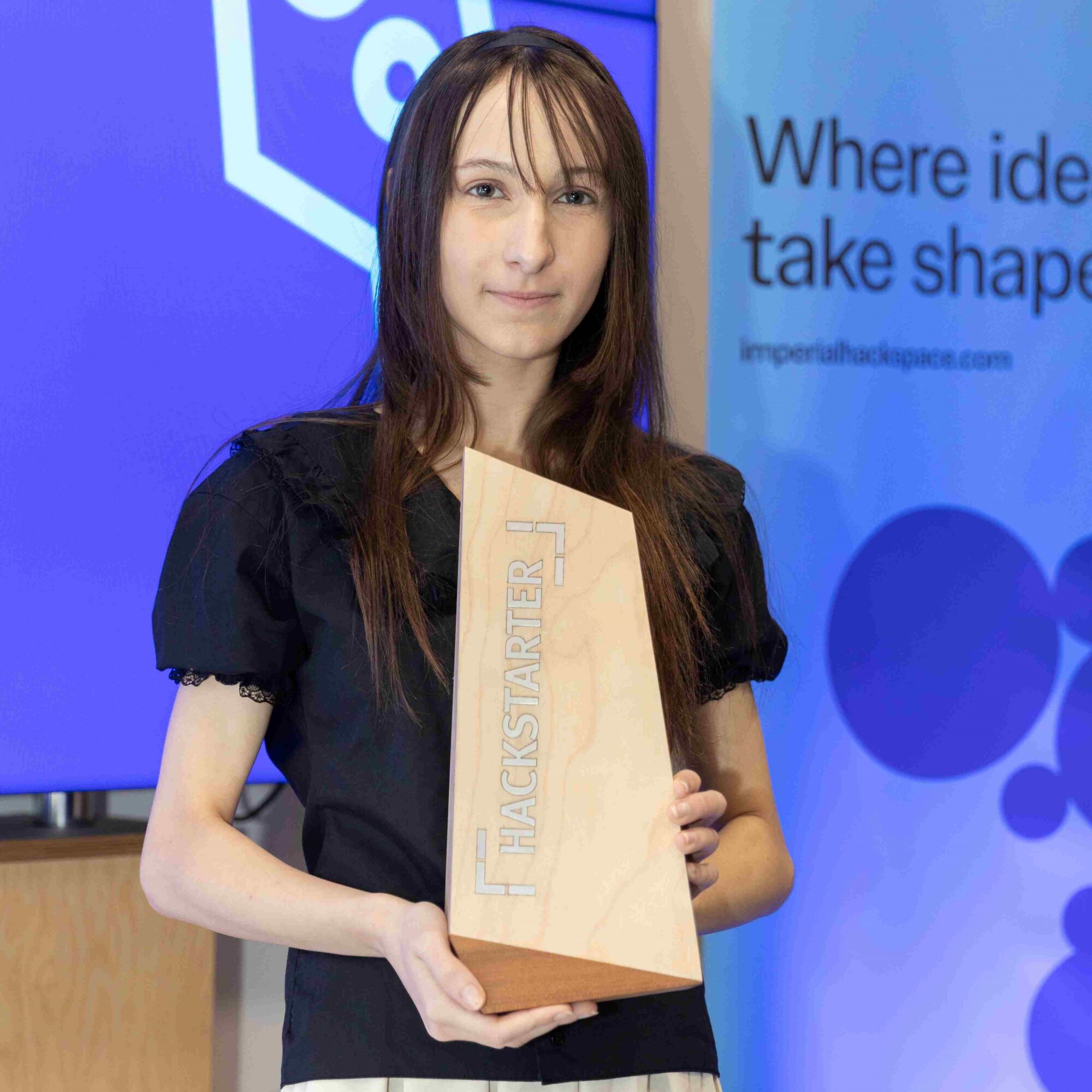
Title: KPlus Potassium Monitoring
Creator:
Stephanie Muggler
Description:
A portable blood potassium monitor that lets at-risk patients test and track their levels anywhere, anytime.
This project focuses on a serious but often unnoticed problem. Many patients with chronic kidney disease, heart failure, or diabetes are at risk of hyperkalaemia, which means having dangerously high potassium levels. The challenge is that there is no simple way for them to check their potassium levels outside of hospital or clinic visits. KPlus solves this by introducing a small, handheld device that allows patients to test their potassium levels as easily as checking blood sugar, wherever they are.
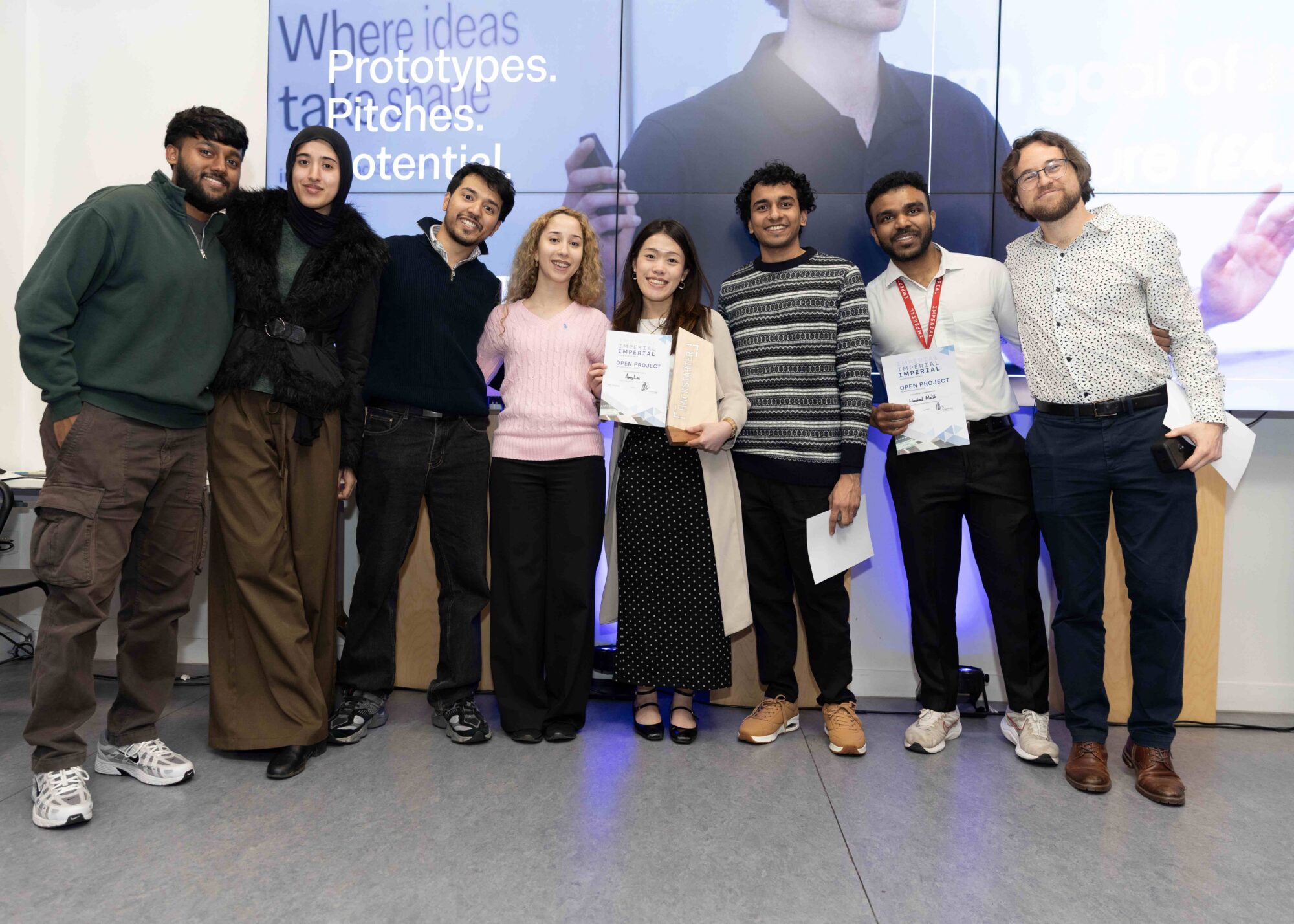
Hackstarter Award: Open Project
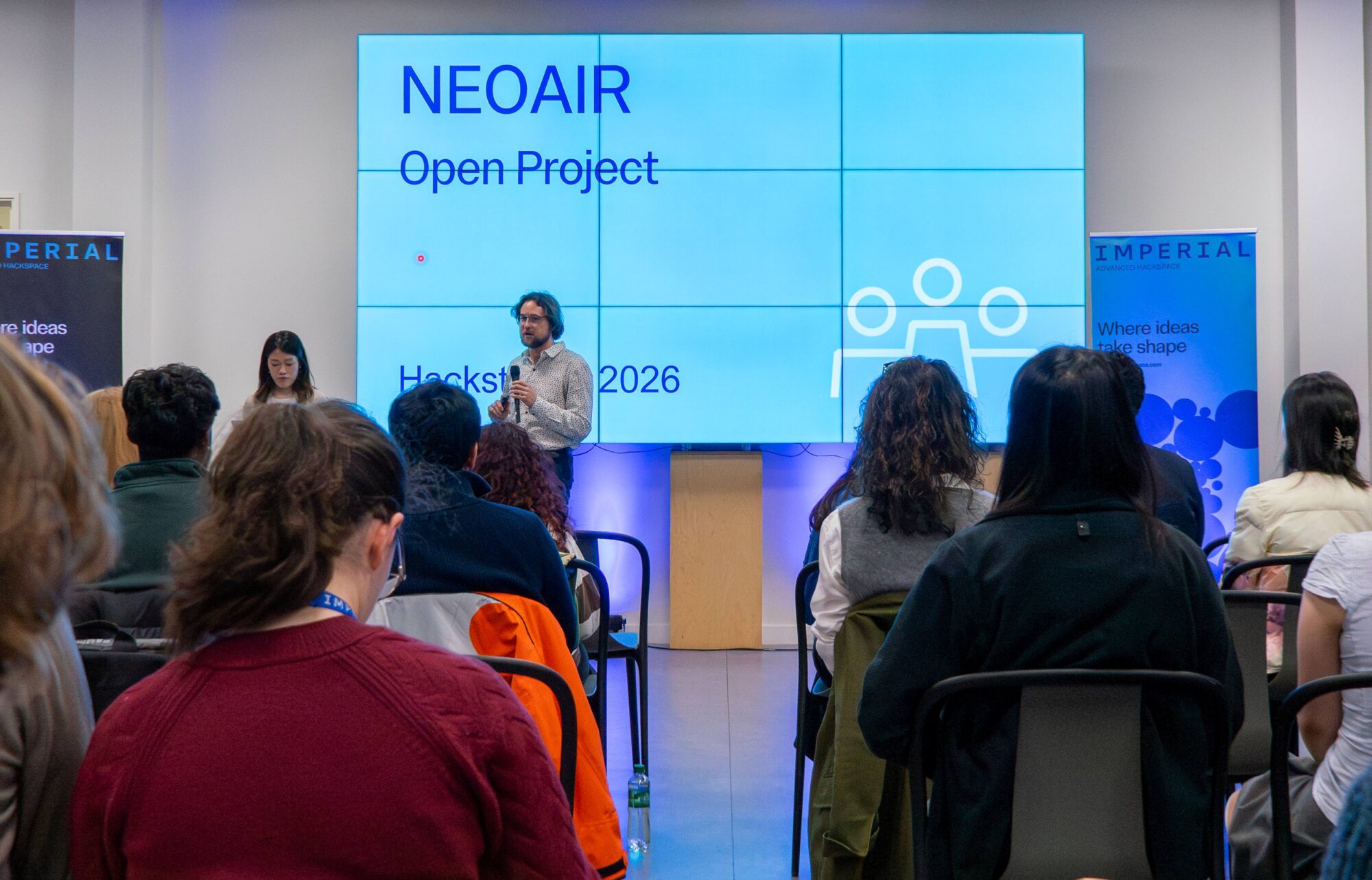
Title: NeoAir
Creator:
Amy Lai, Anton Gerasimov, Harshad Malik
Description:
A device that makes a critical step in treating premature babies with breathing difficulties faster, simpler, and significantly safer.
When a premature baby is born struggling to breathe, doctors may need to administer medicine directly into the airways to help the lungs function. Called the MIST procedure, this requires placing a very small tube in exactly the right place (the airway, not the food pipe) and doing so within just 20 to 30 seconds. This is because prolonged obstruction in the airway can trigger the baby’s heart rate and breathing to drop quickly.
Currently, confirming the tube’s accurate positioning can be slow and inconsistent, which is why nearly half of the first attempts fail. NeoAir is designed to address this. By integrating carbon dioxide detection directly into the tube system, it allows clinicians to safely confirm accurate placemen and quickly administer medicine in one device.
How Hackstarter Made a Difference
The team came to this problem through research literature documenting the high failure rate of the MIST procedure due to issues with confirming the catheter location in a critically short window.
Hackstarter provided the resources and guidance to turn that insight into a prototype solution. Early testing using a simulated lung produced encouraging results: the single-use colourimetric design confirmed correct placement in under two seconds, while the LED-based system demonstrated automatic gas aspiration and clear visual feedback across different CO₂ thresholds. These findings gave the team confidence in the merit of their core idea and provided a strong foundation for further development and rigorous validation.
The Value of Hackstarter
Hackstarter provided the push to move from a compelling idea to a device that works in the real world. Grounded in evidence and user research from the outset, the team moved from concept to a functioning prototype within six weeks. This consisted of a sleeve with live sensor data, a working detection algorithm and a user interface. The pace was demanding, but the time constraint ensured swift decisions, accelerated learning, and produced a working model tangible enough to test and believe in.
Hackstarter Award: Popular Vote
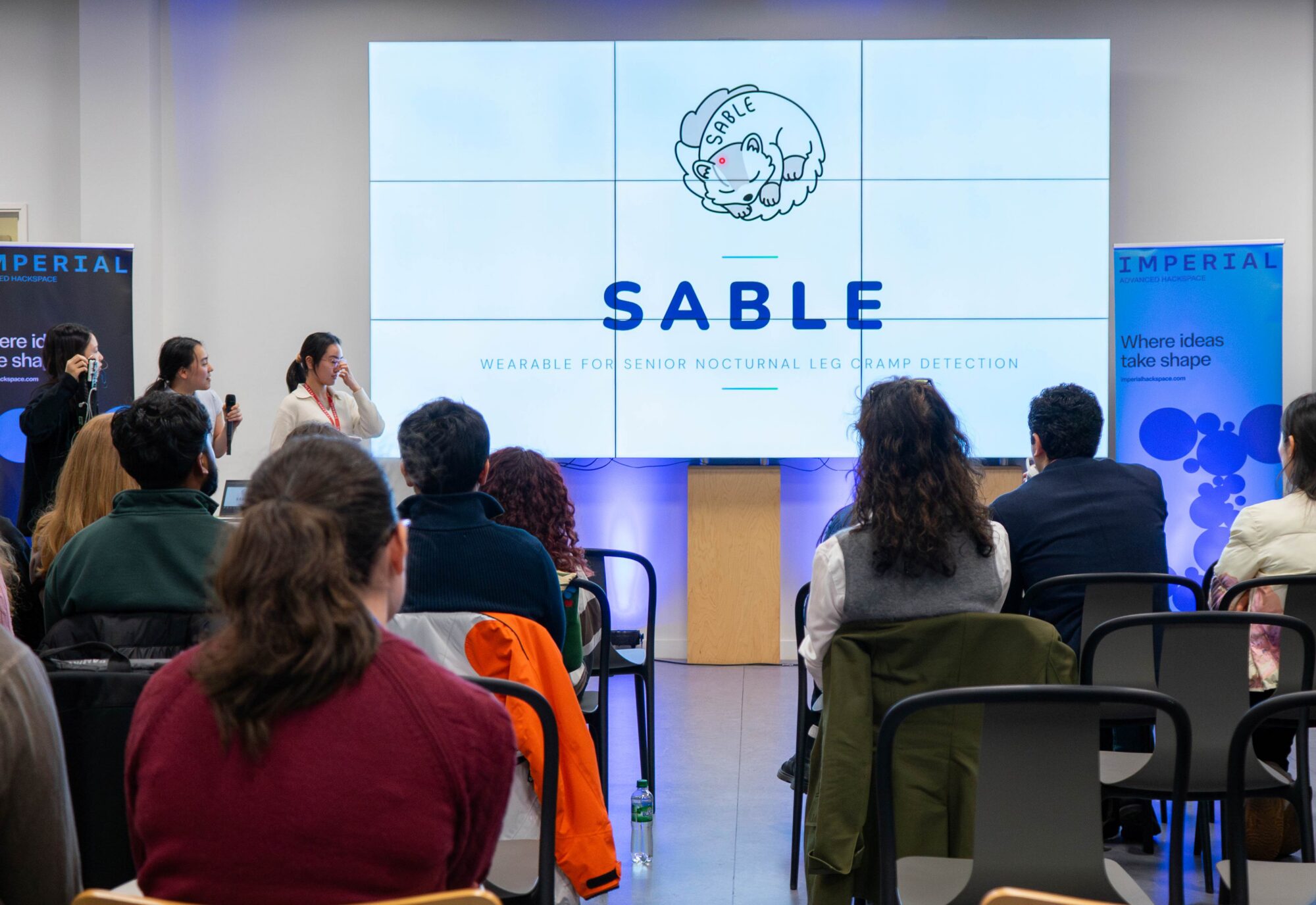
Project Name: SABLE Sleeve
Creators:
Lana Wang, Alice Han and Una Ding
Description:
A smart compression sleeve that monitors muscle activity overnight and delivers personalised insights to help alleviate nocturnal leg cramps.
This project addresses a condition that affects one in three adults over 60 and has, until now, been largely overlooked. Nocturnal leg cramps are disruptive, distressing, and persistently difficult to treat, not because solutions don’t exist, but because there has been no reliable way to determine which solution works for each individual. SABLE addresses this with a smart compression sleeve that monitors muscle activity throughout the night and transforms that data into clear, personalised guidance on what genuinely reduces symptoms.
Hackstarter Award: Popular Vote
Title: SpineSync Wearable System
Creator:
Lizzy Armstrong and Manuela Coronado
Description:
A wearable device that continuously monitors spinal muscle activity, giving physiotherapists objective data to treat the root cause of back pain, and patients real visibility into their own recovery.
SpineSync is a wearable Electromyography system that measures spinal muscle activity in real time. Back pain affects 1 in 4 adults, yet root cause goes unidentified in 90% of cases, because the one thing that matters most, how muscles actually function, is almost never measured. Physiotherapists treat symptoms through observation alone. SpineSync changes that: it detects which muscles are underperforming or overcompensating, automatically generates targeted corrective exercises, and gives clinicians objective data between appointments. This shifts treatment from observation to evidence-based precision, targeting the 70% relapse rate that defines current back pain management.

How Hackstarter Enabled Progress
Hackstarter gave the structure to move from concept to working prototype. The team developed real-time muscle detection capabilities, built activation analysis algorithms, and designed a system that links muscle patterns to personalised rehabilitation plans. Beyond the technical build, the programme helped them validate the clinical need.
The event sparked bold ideas, and with relentless dedication, participants showcased compelling pathways to deliver real, tangible impact.
Advice From Hackstarter Teams
Hackstarter participants share their thoughts on how to get the most from the programme, its benefits and the aspects they found particularly rewarding.
“Take time in your design, because if you do something wrong there then it becomes a bit more difficult later on. But have fun, do something you’ve never done before!”
🔈 Click on the bottom of the image to play the audio clip.
“We had a lot of fun together so first of all, take part with your friends. The second thing is to be passionate about what you want to do. Do something that’s meaningful to you.”
🔈 Click on the bottom of the image to play the audio clip.
✨ Previous Winners: Hackstarter 2025
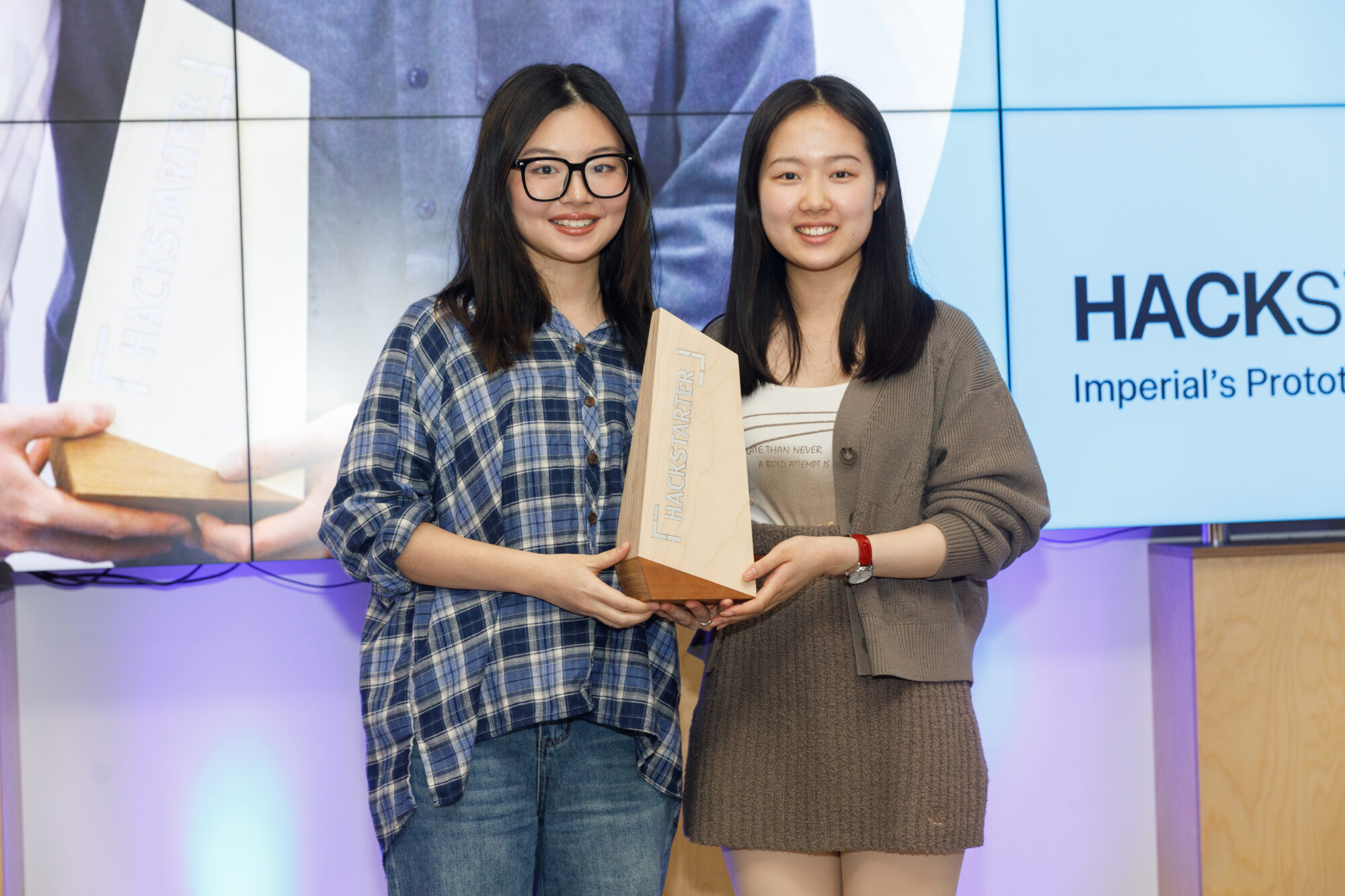
Menosense Wins Hackstarter 2025
Developed by Karina Cheng and Donna Pu, Menosense is an at-home menopause hormone monitoring device that uses saliva-based testing to provide real-time results. Inspired by Cheng’s mother’s experience with menopause, the team aims to make hormone tracking more accessible and informative.

Runner up: Compact Bone Health Scanner
Runner-up Alessandro Liuzzi-Jones, impressed judges with his affordable, compact osteoporosis screening device. Using laser precision technology, his invention has the potential to transform early diagnosis and prevention, addressing a major gap in bone health care.
Hackstarter 2026 Programme Highlights