Meet the team
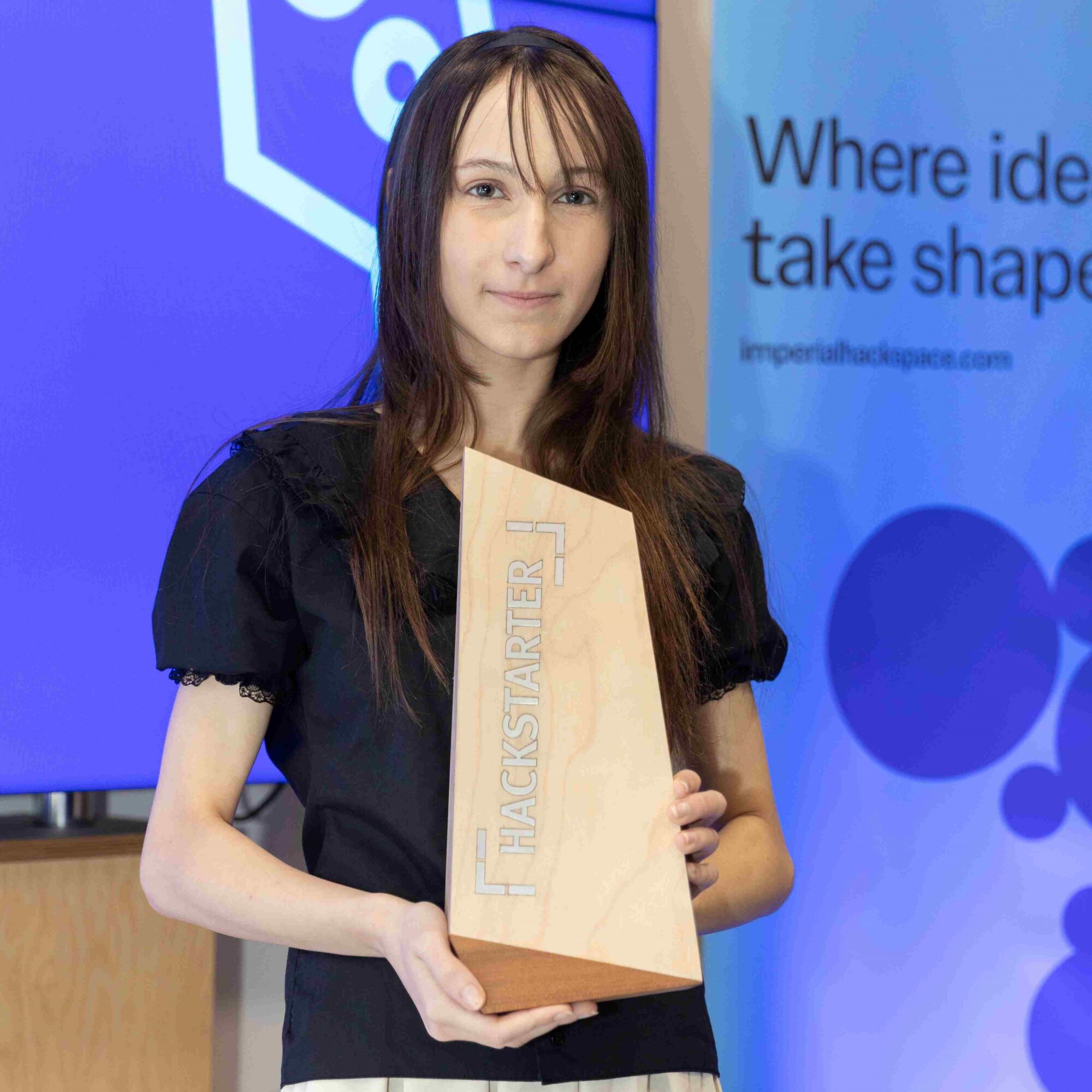
Stephanie Muggler, Founder
Get in touch
Our Project: KPlus
A portable blood potassium monitor enabling at-risk patients to test and track their levels anytime, anywhere.
KPlus: Putting Potassium Monitoring in Patients’ Hands
This project focuses on a serious but often overlooked healthcare challenge. Many patients with chronic kidney disease, heart failure or diabetes are at risk of hyperkalaemia – dangerously high potassium levels that can lead to serious complications if left undetected.
Despite this risk, there is currently no simple way for patients to monitor their potassium levels outside of clinical settings. KPlus solves this with a small, handheld device that allows patients to test their potassium levels as easily as checking blood sugar, bringing essential monitoring into everyday life.
Current potassium testing depends on large and expensive hospital-based equipment, making regular monitoring inaccessible for most patients. Previous attempts to create portable alternatives have struggled with a key technical challenge called sample lysis, where the blood sample breaks down and leads to inaccurate results. KPlus overcomes this problem with a built-in system that protects the sample and ensures reliable readings, all within a compact and portable device.
The Hackstarter Journey
The idea emerged from a real and underserved need: patients managing potassium-related chronic conditions are often left without visibility between clinic appointments with no way to assess whether their levels are safe.
Hackstarter provided the funding, tools and support needed to move from early idea to device fabrication, alongside enabling initial calibration and testing in biological samples. Achieving a functional prototype within the programme’s timeline marked a significant milestone, demonstrating both feasibility and real-world potential.
Learning, Building and Looking Ahead
Much of the valuable learning in Hackstarter has come through practical building and testing – working at the intersection of engineering and biochemistry to create a diagnostic device that is both sensitive, user-friendly and handheld. The next steps include preparing for regulatory pre-submission and pre-clinical trials, as the team moves closer to full commercialisation.
Looking further ahead, the KPlus platform could expand to monitor a broader range of important health markers such as ions, proteins and hormones. The goal is to give patients faster answers, reduce uncertainty and enable better day-to-day management of healthcare conditions.
Hackstarter enabled progression from an idea into a real, working prototype. We’re incredibly grateful for the support and are excited to move towards clinical trials. Advanced Hackspace has given KPlus its first steps, and we hope one day to be able to give back.
More from Hackspace
Be inspired by our possibilities, facilities and success stories.